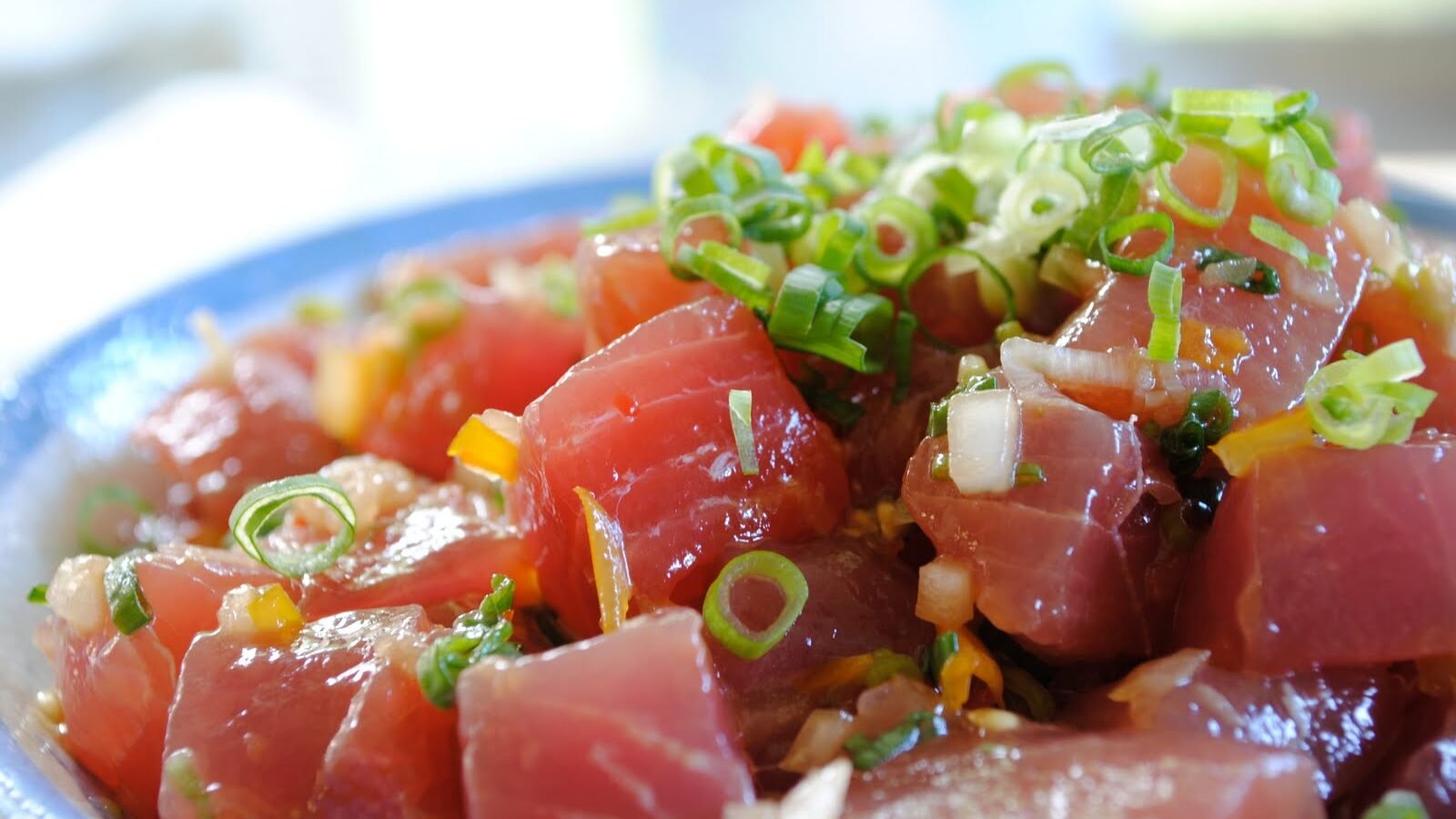
Poke is Hawaii’s culinary gift to the world, but mainland poke bowls piled with corn and edamame bear little resemblance to authentic Hawaiian fresh yellowfin ahi poke marinated in shoyu, sesame oil, and sweet onions.
Key Takeaways
- Closest top pick: Ono Seafood at 747 Kapahulu Ave is a 15–20 minute walk from the Diamond Head end of Waikiki; go before noon, because popular flavors can sell out by mid-afternoon.
- How to order: Ask for a small taste, then choose a bowl (rice plus one or two poke flavors) or buy by the pound for a beach picnic.
- Prices move with the fish auction: Ahi poke is priced per pound and changes with the market, so check the board; expect a spike around New Year’s.
- Keep it cold: Raw poke should go straight into a cooler or fridge and be eaten within a couple of hours if it is sitting on the beach.
Top 3 Poke Spots in Honolulu
1. Ono Seafood (Kapahulu Ave): Just 5 minutes from Waikiki; widely voted Oahu’s best shoyu ahi and Hawaiian-style spicy ahi on warm sushi rice.
2. Maguro Spot (Waikiki / Kūhiō Ave): Central Waikiki gem cutting ultra-fresh sashimi-grade ahi and king salmon to order with customized sauces.
3. Foodland Farms (Ala Moana): The local gold standard poke counter offering 20+ varieties (avocado ahi, wasabi masago, spicy limu).
| Poke Spot | Location | Signature Poke Style | Price Range (2026) |
|---|---|---|---|
| Ono Seafood | Kapahulu Ave (near Waikiki) | Shoyu Ahi & Spicy Ahi Bowl | $14 – $18 / bowl |
| Maguro Spot | Central Waikiki (Kuhio Ave area) | Custom made-to-order fresh ahi bowls | $15 – $22 / bowl |
| Foodland Farms | Ala Moana Center | Spicy Mayo Ahi & Limu Kohu Poke | $12 – $16 / bowl |
Find Best Beach Hotels in Waikiki
How to Order Poke Like a Local
The best poke in Waikiki and Honolulu is all about the fish: deep-red cubes of ahi (yellowfin or bigeye tuna) cut the same day and dressed just before you buy. Local poke counters usually display eight to twenty-plus flavors behind glass, and staff will happily let you taste before you commit.
- Shoyu ahi: soy sauce, sesame oil, sweet onion and green onion — the benchmark for comparing shops.
- Hawaiian-style: Hawaiian sea salt, limu (seaweed) and ʻinamona (roasted kukui nut) — the oldest, simplest style.
- Spicy ahi: creamy chili mayo, often topped with masago (capelin roe).
- Tako and salmon: octopus and salmon versions are cheaper and a good way to round out a mixed bowl.
A poke bowl is rice (white or brown) topped with one or two flavors; ordering by the pound is the better deal if you are feeding a group on the sand. Skip the mainland add-ons — locals rarely put corn or edamame on poke.
Where to Find the Best Poke Near Waikiki
Ono Seafood (747 Kapahulu Ave): a tiny, family-run counter with a handful of parking spaces out front and almost no seating. Bowls come with rice and two poke choices. Hours have shifted over the years and the shop is closed at least one day a week, so call (808) 732-4806 before making a special trip.
Maguro Spot (2441 Kūhiō Ave): the most convenient sit-down-or-takeout option in central Waikiki, cutting bowls to order; recent listings show it open daily from about 10 AM to 8:30 PM.
Maguro Brothers: started as a fish counter in Chinatown (now 1120 Maunakea St, 9 AM–2 PM) and runs a dinner-only Waikiki counter at 2250 Kalākaua Ave, by the Royal Hawaiian Ave entrance of Waikiki Shopping Plaza, open 5–8 PM. Both close on Sundays, and the Waikiki line often forms before opening.
Foodland Farms Ala Moana: the grocery chain’s poke counter is the local default for picnic-size quantities; the store, in the ʻEwa wing of Ala Moana Center, is open daily 6 AM–10 PM. Pair it with a sunset at Magic Island.
For more variety, Fresh Catch on Waialae Avenue and the poke counters inside Tamura’s Fine Wine & Liquors stores carry dozens of flavors, including tako and smoked-fish versions.
Freshness, Safety and Beach-Picnic Tips
Good poke looks glossy and smells clean, like the ocean, never fishy. Buy it as close to eating time as you can: mornings bring the widest selection, and afternoon cases at the busiest counters can run low on favorites. On hot days, bring a small cooler bag with ice (grocery and ABC stores sell them — see our Waikiki grocery guide) and eat within a couple of hours.
- Pregnant travelers and anyone with a weakened immune system should choose cooked options such as seared ahi, furikake salmon or a Spam musubi instead.
- Buy extra rice: poke by the pound does not include it.
- Late December is peak season for poke trays; lines and prices both climb before New Year’s Eve.
Getting to the Poke Shops from Waikiki
Kapahulu Avenue starts at the Honolulu Zoo, so Ono Seafood is an easy walk from Diamond Head–end hotels. TheBus Routes 13 and 14 run along Kapahulu Ave; as of July 2026 the adult cash fare is $3.25, or $3.00 for a two-hour HOLO card pass with transfers. Maguro Spot and the Maguro Brothers Waikiki counter are walkable from anywhere in Waikiki. To reach Foodland at Ala Moana Center, take any Ala Moana–bound bus or ride a Biki bike down Ala Moana Boulevard. Parking at the Kapahulu shops is very limited, so walking or the bus is usually faster than driving.
Where to Stay Nearby
For poke runs, base yourself at the Diamond Head end of Waikiki, a short walk from the Kapahulu Avenue counters. The Queen Kapiolani Hotel puts you steps from the zoo and the start of Kapahulu Ave. If you plan to buy poke by the pound for picnics, a condo-style room with a fridge makes life easier — see our list of Waikiki hotels with full kitchens. Travelers who would rather be near Foodland Farms and the Ala Moana beach park should compare our best Waikiki hotels near Ala Moana Center.
Find Hotels Near Your Plans
Frequently Asked Questions
What is the best poke in Waikiki?
Ono Seafood on Kapahulu Avenue is the long-time local favorite and the closest legendary shop to Waikiki. Inside Waikiki itself, Maguro Spot on Kūhiō Avenue and the Maguro Brothers dinner counter on Kalākaua Avenue cut fish to order. For the biggest selection by the pound, go to Foodland Farms at Ala Moana Center.
How much does a poke bowl cost in Honolulu?
Expect roughly $14–$22 for a regular bowl at the shops in this guide, depending on fish and size. Poke by the pound is priced daily according to the fish market, and ahi always costs more than tako or salmon. Prices rise around the holidays, especially before New Year’s Eve.
Is it safe to eat raw poke in Hawaii?
Yes, when you buy from a busy, reputable counter and keep it cold. Popular shops turn over their fish quickly. Don’t leave poke in a hot car or on the sand for long, and choose cooked items if you are pregnant, very young or immunocompromised.
What is the difference between shoyu poke and Hawaiian-style poke?
Shoyu poke is marinated in soy sauce, sesame oil and onions, giving a savory, slightly sweet flavor. Hawaiian-style poke is older and simpler: Hawaiian sea salt, limu seaweed and roasted kukui nut (ʻinamona), so the fish tastes cleaner and more of the ocean. Try both side by side in a two-choice bowl.
Can I eat poke on the beach in Waikiki?
Yes. Picnicking is common on Waikiki’s beaches and in Kapiʻolani Park and Ala Moana Beach Park. Bring a cooler bag, eat within a couple of hours, and pack out your containers and chopsticks. Glass bottles are best left at the hotel.
Photo credits
- Photo: Openmalware.exe / CC BY-SA 4.0 via Wikimedia Commons