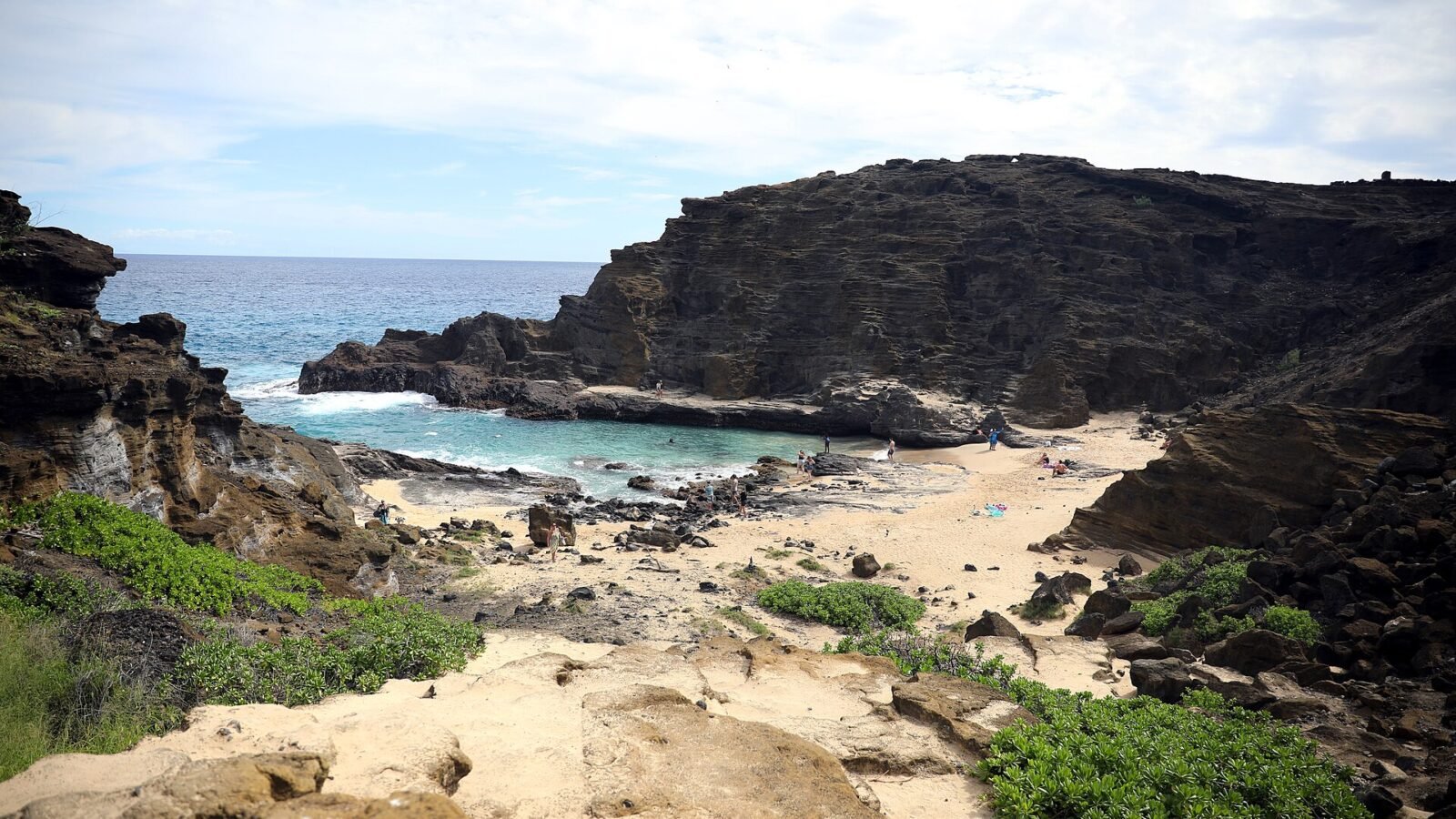
Located along the rugged volcanic coastline of East Oahu on Kalanianaʻole Highway, the Hālona Blowhole Lookout is one of the island’s most thrilling geological spectacles.
Key Takeaways
- Cost and access: The lookout and its parking lot are free. The lot is on the ocean side of Kalanianaʻole Highway (Route 72), just past Hanauma Bay, and a 15- to 30-minute stop is usually enough.
- Best conditions: The blowhole is most active at higher tide with strong winds and swell. On flat, calm days it may only puff, so pair it with other stops rather than making a special trip.
- Whale bonus: From November through April, humpback whales winter in Hawaiian waters, and the lookout’s high vantage point is a good place to scan for spouts.
- Eternity Beach: Hālona Cove has no lifeguard and is reached by a steep, rocky scramble. Only go in on genuinely calm days; strong currents run offshore in the Kaiwi Channel.
Quick Verdict: What Makes Hālona Blowhole a Must-Stop?
Thousands of years ago, molten lava formed hollow underwater tunnels. When waves surge into the submerged cavern, water shoots up to 30 feet into the air like a geyser. Nestled right beside the lookout is Hālona Cove (Eternity Beach), where the famous romantic beach scene in the 1953 classic movie “From Here to Eternity” was filmed.
| Feature | Hālona Lookout Information |
|---|---|
| Location | Kalanianaʻole Highway (about 30 min drive from Waikiki) |
| Lookout Amenities | Free paved parking viewing deck with panoramic ocean vistas |
| Best Conditions | High tide and windy days with strong eastern surf swells |
| Eternity Beach (Cove) | Steep rocky scramble down to a sandy cove (caution: strong currents) |
Find Hotels in Waikiki Near Scenic Drives
How to Visit Halona Blowhole from Waikiki
Halona Blowhole is an easy stop on the southeast shore drive. From Waikiki, take H-1 East; the freeway becomes Kalanianaʻole Highway (Route 72) and follows the coast past Hawaiʻi Kai and the Hanauma Bay turnoff. The Hālona lookout is on the ocean side a short way after Hanauma Bay. In normal traffic it’s roughly half an hour from Waikiki. Hālona means “lookout” in Hawaiian, and the paved overlook with railings is exactly that.
TheBus doesn’t serve the lookout itself. The closest service, Route 23, loops inland through Hawaiʻi Kai and reaches the coast near Sandy Beach, about a mile east, on its way to Sea Life Park. Walking the highway shoulder isn’t safe, so most visitors drive or join a circle-island tour. The lot is small but turns over quickly. Don’t stop on the highway shoulder, and take valuables with you, because scenic lookouts are common targets for car break-ins.
Build a half-day loop around it. Snorkel at Hanauma Bay (reservations required) or climb the Koko Head stairs early, then stop at Hālona and Sandy Beach. Sandy Beach has lifeguards and restrooms, but its shorebreak is for experts only. Finish with the Makapuʻu Lighthouse Trail or Sea Life Park. One timely note: DLNR has closed the upper viewing area at Makapuʻu Lookout for repairs from October 21 through November 4, 2026, with only limited viewing in the meantime.
When the Blowhole Performs Best
The blowhole formed when lava from Koko Crater flowed into the sea, leaving tubes that are narrow at the top. When a wave surges into the submerged opening, the pressure forces a jet of spray through the hole, up to about 30 feet on strong days, often with a deep whoosh. It’s most active when the tide is higher and the wind and swell are strong. On calm summer mornings you may see only small bursts, so check the tide before you go and treat the blowhole as a bonus.
- Light: morning sun lights the water to the south and east. Late afternoon is softer but busier with tour vans.
- Whales: NOAA’s humpback whale sanctuary says the whales are in Hawaiʻi from November through April. Bring binoculars, and look for spouts and breaches toward Molokaʻi.
- Turtles: honu often feed along the rocks below. Watch from the railing and enjoy them from a distance.
Stay behind the railings. The wet rock shelf around the blowhole looks walkable, but waves wash across it without warning.
Eternity Beach (Hālona Cove): Is the Scramble Worth It?
The little sand pocket beside the lookout is Hālona Cove, nicknamed “Eternity Beach.” It’s where Burt Lancaster and Deborah Kerr filmed the famous surf-kissing scene in the 1953 film From Here to Eternity, and it also appears in 50 First Dates. Locals call it Cockroach Cove. Getting down means a short but steep scramble over loose, rocky ground, so wear real shoes, not flip-flops, and keep both hands free.
There’s no lifeguard, no shade and no facilities. When surf is up, waves sweep into the cove and pull back hard toward the open channel. Beyond the point lies the Kaiwi Channel, known for powerful currents. Go in only on truly flat days, stay close to shore and never swim alone. If you’re unsure, just enjoy the view from above. Pack out everything you bring.
Where to Stay Nearby
The Diamond Head end of Waikiki gives you the quickest start toward Kalanianaʻole Highway and the sunrise coast. The Kaimana Beach Hotel sits right on Sans Souci Beach, and the Queen Kapiolani Hotel offers Diamond Head views for less. If you’re renting a car for the southeast shore, compare our list of Waikiki hotels with free or cheap parking, since parking fees can easily outweigh a day’s rental.
Find Hotels Near Your Plans
Frequently Asked Questions
Is Halona Blowhole free to visit?
Yes. There’s no ticket or reservation, and the lookout’s parking lot is free. The catch is space: the lot is small and fills around sunrise, sunset and when tour vans arrive. Most visits take 15 to 30 minutes, so if the lot is full, loop to Sandy Beach and come back rather than parking on the highway shoulder.
Can you swim at Eternity Beach?
Only on calm days, and at your own risk. Hālona Cove has no lifeguard, the path down is steep and rocky, and when surf is up waves surge into the cove and pull back hard toward the Kaiwi Channel, which is known for dangerous currents. Strong swimmers should stay close to shore and never swim alone. Otherwise, enjoy the view from the lookout.
What is the best time to see Halona Blowhole erupt?
Go when the tide is higher and the wind and swell are up. Those conditions push more water into the lava tube and make taller sprays, sometimes up to about 30 feet. Early morning gives good light and easier parking. On calm, low-tide days the blowhole may barely puff, so combine it with Hanauma Bay or Makapuʻu.
Can you see whales from the Halona Blowhole Lookout?
Often, in season. NOAA’s Hawaiian Islands Humpback Whale National Marine Sanctuary says humpbacks are in Hawaiian waters from November through April. The lookout sits high above open ocean, so bring binoculars and scan for spouts and breaches. Makapuʻu Point, a few minutes further east, is another excellent viewpoint.
Photo credits
- Photo: Gage Skidmore from Surprise, AZ, United States of America / CC BY-SA 2.0 via Wikimedia Commons


